

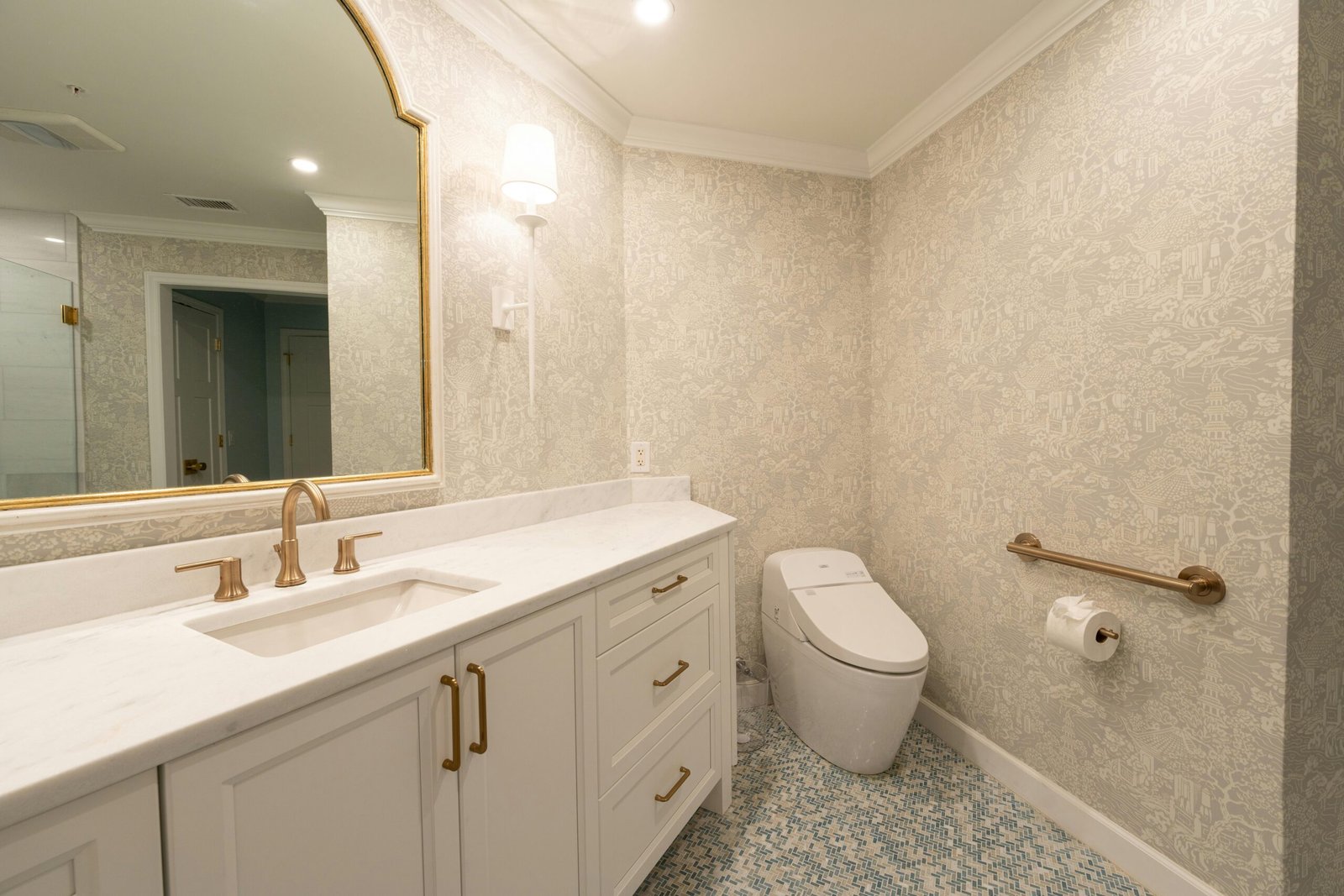
Aging in place bathroom remodel is about making practical, cost-effective upgrades so seniors can safely use their home bathroom for years without fear of injuries or expensive rework. If you’re an adult child managing renovations for a parent—or a senior planning ahead—focus on highly impactful changes that directly reduce fall risks and support independence without blowing your budget.
Key Takeaways
- Prioritize a curbless walk-in shower, slip-resistant flooring, and professionally installed grab bars for the best safety and value.
- Basic curbless shower conversions start around $1,500–$5,000, while ADA-compliant full remodels can reach $8,000–$45,000 depending on scope and location.
- Common mistakes include poor grab bar placement, slippery floors, and narrow layouts—avoid these with careful planning and a detailed contractor estimate.
- Quick overview: What “aging in place bathroom remodel” means and the most effective upgrades
- Step-by-Step: Actionable aging in place bathroom remodel guide
- Advanced analysis and common pitfalls to avoid
- Conclusion
- FAQ
Quick overview: What “aging in place bathroom remodel” means and the most effective upgrades
An aging in place bathroom remodel means designing and renovating a bathroom specifically so a person with limited mobility (or who plans to have limitations in the future) can bathe, toilet, and move safely without unnecessary help. The key goals are safety, independence, and long-term usability without major further changes.
Based on recent research, the three most effective upgrades with the highest impact for most homeowners are:
- Curbless walk-in shower or zero-threshold retrofit—removes a major tripping hazard and increases accessibility for anyone with limited mobility (source).
- Slip-resistant flooring throughout the wet zones—textured porcelain tile and rubber sheet flooring have led to the highest satisfaction and lowest fall rates for seniors (source).
- Professionally installed grab bars—especially near the toilet and shower entry, with proper wall blocking to support real weight loads (source).
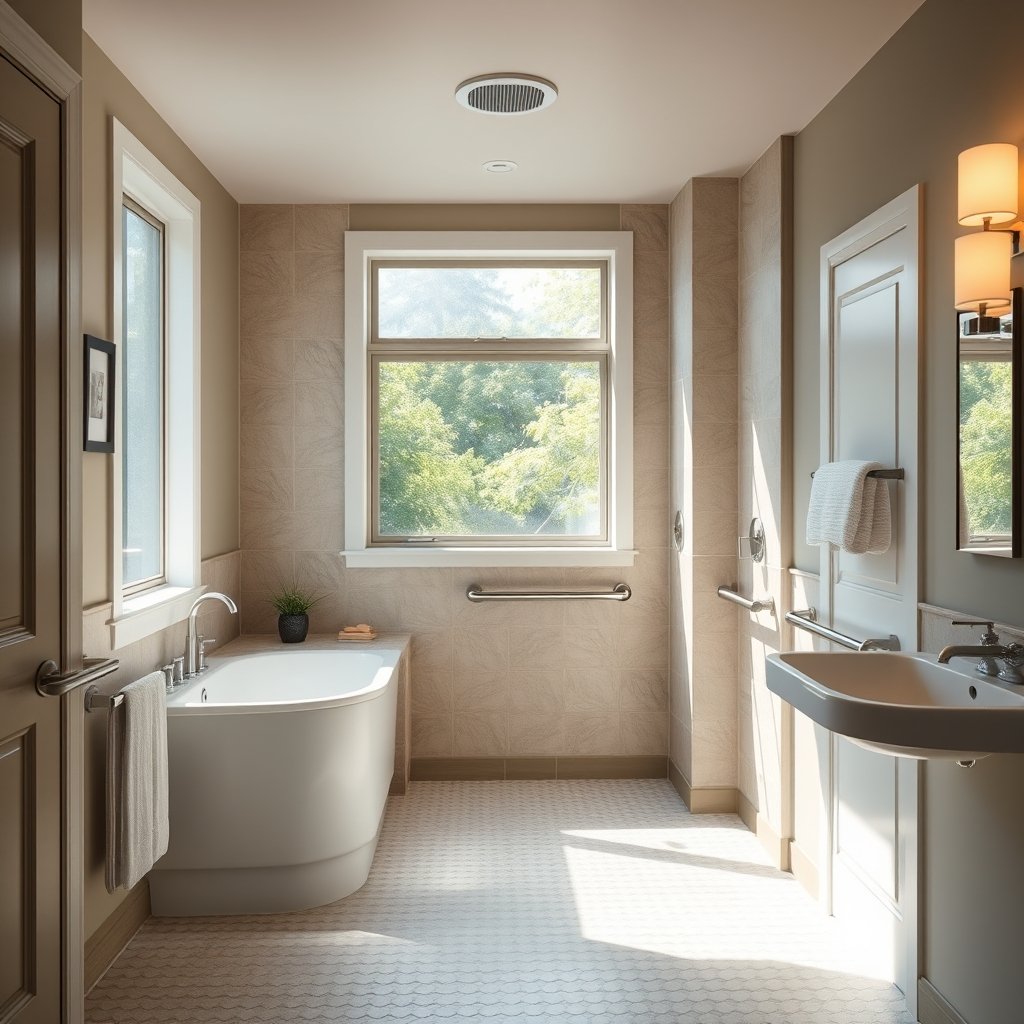
Other upgrades—like fold-down shower benches or accessible vanities—add value, but start with these top three changes for the best balance of safety and budget.
Step-by-Step: Actionable aging in place bathroom remodel guide
Here’s how to tackle an aging in place bathroom remodel from planning to project completion. You can use this as a checklist whether you’re doing a small retrofit or a full ADA remodel.
- Assess the current bathroom thoroughly.
- List mobility issues (walker, wheelchair, unstable standing, limited vision, etc.).
- Measure all clearances: door width (should be at least 32 inches for a walker, ideally 36 inches for full wheelchair access), open floor space, distance to fixtures.
- Check for current hazards: slippery floors, high thresholds, cramped layouts, awkward faucet placement.
- Decide on your priorities within your budget.
- Curbless shower conversion: $1,500–$5,000 for basic, $3,000–$15,000 for custom with linear drains and built-in seat (details).
- Grab bar installation cost: $200–$600 for 3–4 bars with blocking.
- Slip-resistant flooring bathroom: $8–$15 per square foot for non-slip tile; rubber sheet is similar in total cost.
- Full ADA bathroom remodel: $8,000–$28,000 nationally, or $15,000–$45,000 in high-cost markets (learn more).
- Choose your flooring and fixtures.
- Top-performing slip-resistant options: Textured porcelain tile and rubber sheet flooring; LVP/LVT is a good compromise for budget or comfort.
- Look for fixtures with lever handles, hand-held showerheads, and anti-scald valves.
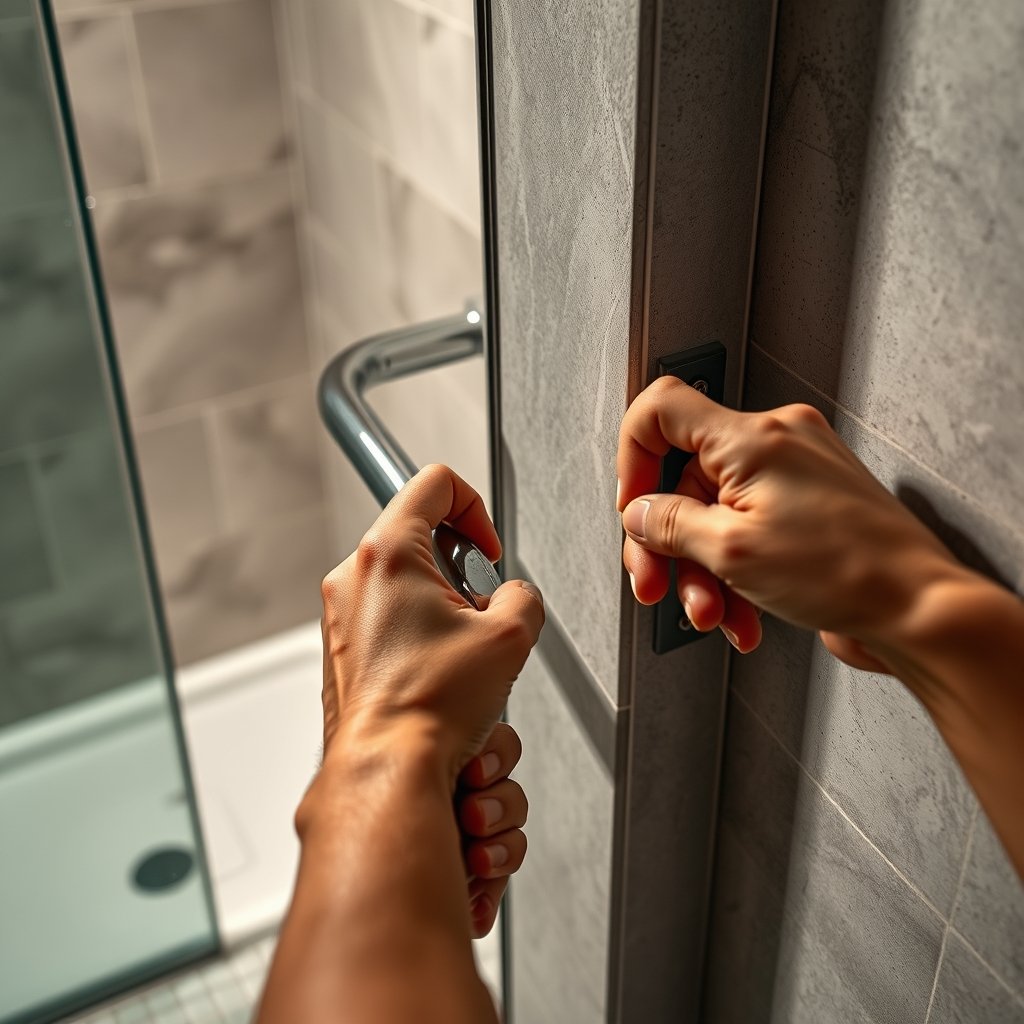
- Specify grab bars at least 1.25-inch diameter, rated to hold minimum 250 pounds, installed with wall blocking.
- Work with a contractor who understands aging in place home modifications.
- Ask about their experience, references, and if they know ADA standards.
- Demand an itemized estimate showing unit costs for blocking, tile, grab bars, and any structural changes.
- Verify that grab bars are installed to real-world load standards, not just surface-mount anchors.
- If you need a wide doorway remodel for wheelchair access, clarify scope and cost up front.
- Plan your construction sequence to reduce disruption.
- Typical order: demo, plumbing/drainage, waterproofing, flooring/tile, then hardware/fixtures.
- Basic curbless shower conversion: 1–2 weeks; full remodel: 3–5 weeks depending on complexity.
- Consider renting a temporary bathroom, using a neighbor’s, or requesting a split-phase remodel to keep one toilet or sink available.
- Upon completion:
- Test all bars and fixtures before signing off.
- Check for puddling, uneven flooring, and tight spots around doors or vanities.
- Request written warranty—especially for waterproofing, plumbing, and tile.
Advanced analysis and common pitfalls to avoid
Most negative experiences with aging in place home modifications come from avoidable mistakes in planning or execution. Learn from real homeowner complaints and reviews to prevent costly problems or rework later.
Top 3 Failure Points and How to Avoid Them
| Common Failure | Impact | Avoidance Strategy |
|---|---|---|
| Poor grab bar placement or capacity (incorrect height, inadequate blocking) | Grab bars may not support full body weight when needed, leading to injury and expensive rework. | Require professional installation, insist on adequate wall blocking, and use ADA guidelines for placement and spacing. |
| Slippery or uneven floors—even with “non-slip” flooring claims | Ongoing fall risk, especially for those using walkers or wheelchairs; frequent complaints in reviews (see evidence). | Choose proven materials: textured porcelain tile or rubber sheet. Test samples wet and dry before committing. |
| Cramped layouts—narrow doorways, insufficient turning radius | Blocks wheelchair/walker users and future-proofs poorly. Leads to unplanned, expensive expansions if needs change. | Plan for at least 32–36-inch doorways and 60-inch clear turning radius wherever possible. Consult a specialist if in doubt. |
Realistic Downsides and Considerations
- Curbless shower conversions may require subfloor reframing in older homes, which can add unseen costs and extend the timeline.
- Some non-slip flooring options are colder or harder underfoot—rubber or cushioned vinyl is better for comfort.
- Proper wall blocking for grab bars sometimes means opening more wall than planned—factor this into your disruption allowance.
If your project needs a wide doorway remodel for wheelchair access, budget for new framing and finish work—this is a frequent point of scope creep.
Finally, always get an itemized bid and ask specifically about hidden extras like waterproofing details, drain upgrades, temporary dust protection, and warranty coverage—cost overruns are a top frustration cited by families and seniors.
Conclusion
With the right upfront planning, an aging in place bathroom remodel can be affordable, safe, and long-lasting—delivering peace of mind through every stage of life. By focusing on curbless shower conversion, slip-resistant flooring, and smart grab bar installation, you’ll prevent the most common dangers and headaches, while making your home fit for the future. Start with a clear list of priorities for your contractor, insist on real-world install standards, and don’t overlook the details that drive comfort every day. Ready to take the next step? Gather your measurements, photos, and must-have features—then reach out for a local estimate today.
FAQ
What is the first upgrade I should make for a safer bathroom?
The top upgrade is installing a curbless walk-in shower to eliminate tripping hazards and make bathing safer and easier for people with mobility limitations.
How much does an aging in place bathroom remodel really cost?
Expect to pay $1,500–$5,000 for a basic curbless shower conversion, $200–$600 for professional grab bar installation, and $8,000–$45,000 for a full ADA bathroom remodel package, depending on your location and bathroom size.
Which slip-resistant flooring is best for seniors?
Textured porcelain tile and rubber sheet flooring have the highest ratings for safety and comfort, with the lowest reported fall incidents among seniors.
What common mistakes should I avoid in an aging in place bathroom remodel?
Top mistakes are insufficient grab bars or poor placement, using flooring that remains slippery even when labeled “non-slip,” and not widening doors or creating enough turning radius for wheelchairs or walkers.
Do all contractors know how to do ADA bathroom remodels?
No. Always ask for specific experience with aging in place home modifications, check references, and confirm familiarity with ADA standards and installation requirements.