

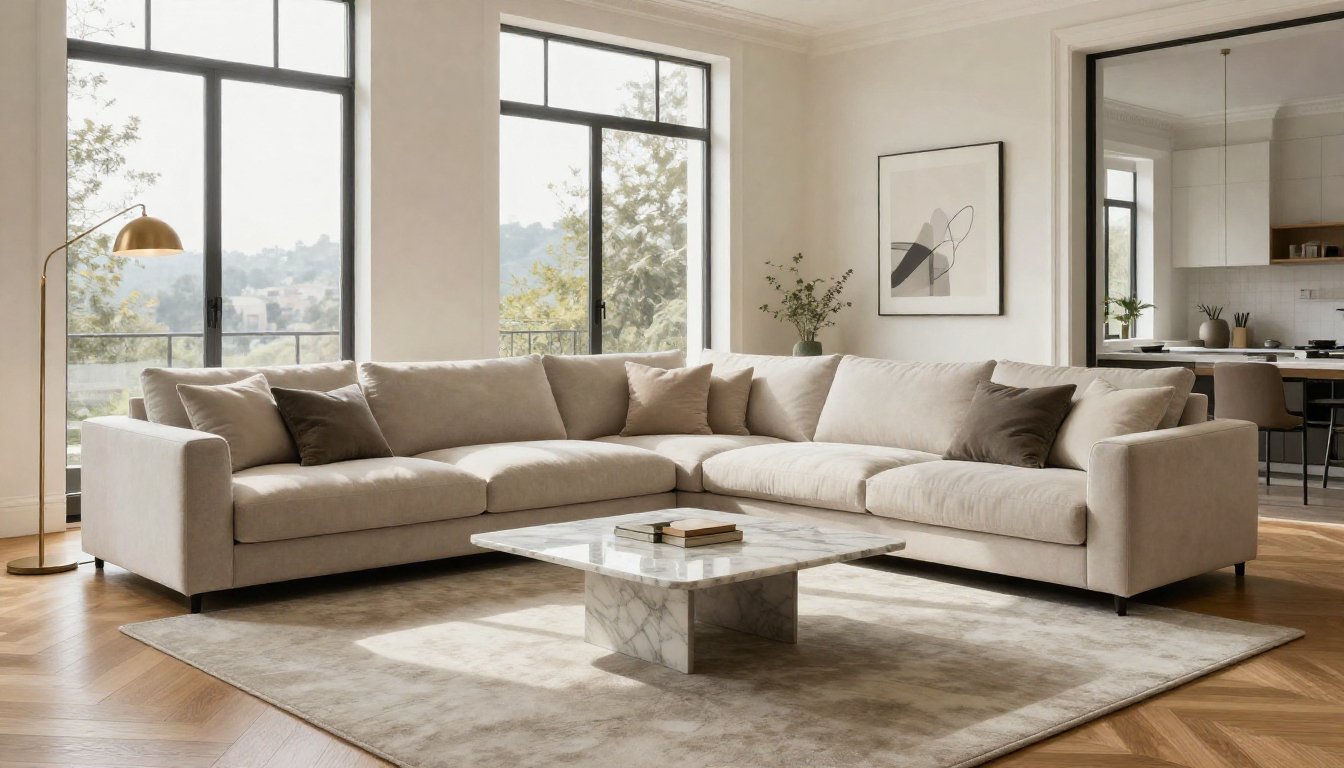
Modular sectional sofa shopping isn’t just about maximizing style or squeezing extra seats into your city apartment. For urban renters and buyers under 600 sq ft, the right modular sofa solves real layout headaches, reduces risk, and adapts painlessly as your needs (or lease) change. Here’s how to buy one that feels good on day one—and five years later.
Key Takeaways
- Modular sectional sofas offer unmatched flexibility for small apartments, helping avoid “locked-in” layouts and wasted space.
- Most common buyer regrets involve discomfort after reconfiguring, complex assembly, and premature connector or fabric wear—always test before you buy and check maintenance recommendations.
- Don’t ignore overlooked factors like acoustics, individual module warranties, pet/accessibility needs, and environmental impact for a smarter, lower-risk purchase.
- Why a modular sectional sofa is often the best choice for small urban apartments
- Market snapshot — availability, price ranges, and why now is a good time to buy
- Common buyer complaints — what to watch for during evaluation
- Configurations that work best in tight footprints
- How to test comfort and reconfigurability before you buy
- Assembly, connector types and maintenance — avoid the common longevity traps
- Overlooked but critical buyer concerns
- Materials, fabrics and pet-proofing — what to prioritize
- Warranty, service, returns and resale — read the fine print
- Apartment buyer’s quick checklist
- Suggested shopping flow and decision timeline
- Final recommendations and 3 plug-and-play configurations
Why a modular sectional sofa is often the best choice for small urban apartments
A modular sectional sofa stands out as the most versatile solution for urban homes with under 600 sq ft. Whether you’re renting or moving every year or finally buying a compact condo, a modular sofa for small apartments solves three key problems:
- Flexible fit for awkward spaces. Modules can be swapped, flipped, or split to suit whatever room layout your next lease throws at you. Forget worrying about blocked doorways or windows.
- More seating, less wasted space. A modular sectional gives you genuine multi-use: family seating, lounging, sleeping, or even dividing an open-plan studio.
- Lower risk of a “bad fit” purchase. If you move or redecorate, you’re not stuck with one huge, heavy piece. You can add/remove modules as needed, reducing costly furniture turnover when lease terms end.
According to 2024 market research, U.S. modular sectional sofa sales aimed at small urban apartments grew approximately 12% year-over-year, with 1.8 million new units sold—mainly in cities where apartments average under 600 sq ft[source].
With flexible layouts and reduced risk, the modular approach increasingly dominates urban apartment furnishing—and, if chosen carefully, can outlast multiple leases.

Market snapshot — availability, price ranges, and why now is a good time to buy
There’s never been a better time to buy an apartment-sized modular couch or modular sectional. Choice has exploded—brands compete fiercely, so prices are competitive, quality ranges have widened, and you can often buy more modules later to expand seating.
| Size | Seats | Typical Price Range (USD) | Delivery | Common Features |
|---|---|---|---|---|
| Compact 2-3 modules | 2–3 | $800–$1,500 | Flat-pack/Boxed 1–3 week delivery |
Removable covers, storage ottoman |
| L-Shape (4–5 modules) | 3–5 | $1,200–$2,500 | 2–4 week delivery | Chaise, modular ottoman, tool-free connectors |
| Expanded/U-shaped | 5–7 | $1,800–$4,000+ | 4–8 week lead | Optional sleeper, storage arms |
While the modular sectional sofa segment now covers over 15% of all sofa sales[AD], wider choice means you’ll need to sort carefully for quality. Look for brands that let you “build your own sectional sofa” or offer “modular sofa L-shaped customizable” sets. Aftermarket modules for add-ons and replacement are now common.
Watch for:
- Hidden delivery, return, or assembly fees
- Wide variance in foam/fabric quality between brands
- Genuine trial or return policies (not just “exchanges”)

Common buyer complaints — what to watch for during evaluation
With more models on the market, the gap between the best and most frustrating modular sectional sofas has widened. The top issues (based on consumer surveys and forum discussions[Atunus]) are:
- Uneven comfort after rearranging: Lower-cost models often cut corners on support padding or use inconsistent foam densities, especially in seat modules versus chaises or ottomans. This results in “hot spots” or sagging when you flip or change configurations.
- Complicated or tool-heavy assembly: Some rearrangeable sectional couch brands require significant effort to connect modules—expect everything from metal brackets to plastic runner systems that may squeak or loosen over time.
- Connector and fabric wear: Frequent reconfiguring accelerates wear on hidden hardware, causing drifting, misalignment, or unwanted movement. Squeaks and “gaps” are a common pain point after a year of steady use.
- Limited adjustability: Unlike high-end, custom-built sofas, many modular systems don’t let you tweak seat depth or back angles, so you trade configuration range for ergonomic precision.
You can reduce risk by reviewing in-store floor models, reading third-party reviews, or joining owner discussion groups (such as Reddit or Facebook groups).
| Problem | What to Check | Recommended Fix |
|---|---|---|
| Uneven comfort | Sit on every module after reconfiguration | Check for high-resilience or multi-layer foam; demand a trial period |
| Assembly frustration | Ask to try assembling a module in store | Aim for tool-free connectors if moving often |
| Section drift/gap | Inspect connector style & material | Choose metal over plastic; ask about replacement parts |
| Wear/squeaking | Look for reviews 6–12 months after purchase | Request maintenance tips from brand |
Evaluating a build your own sectional sofa isn’t just about measuring—dig into real-world usage feedback to spot red flags early.
Configurations that work best in tight footprints
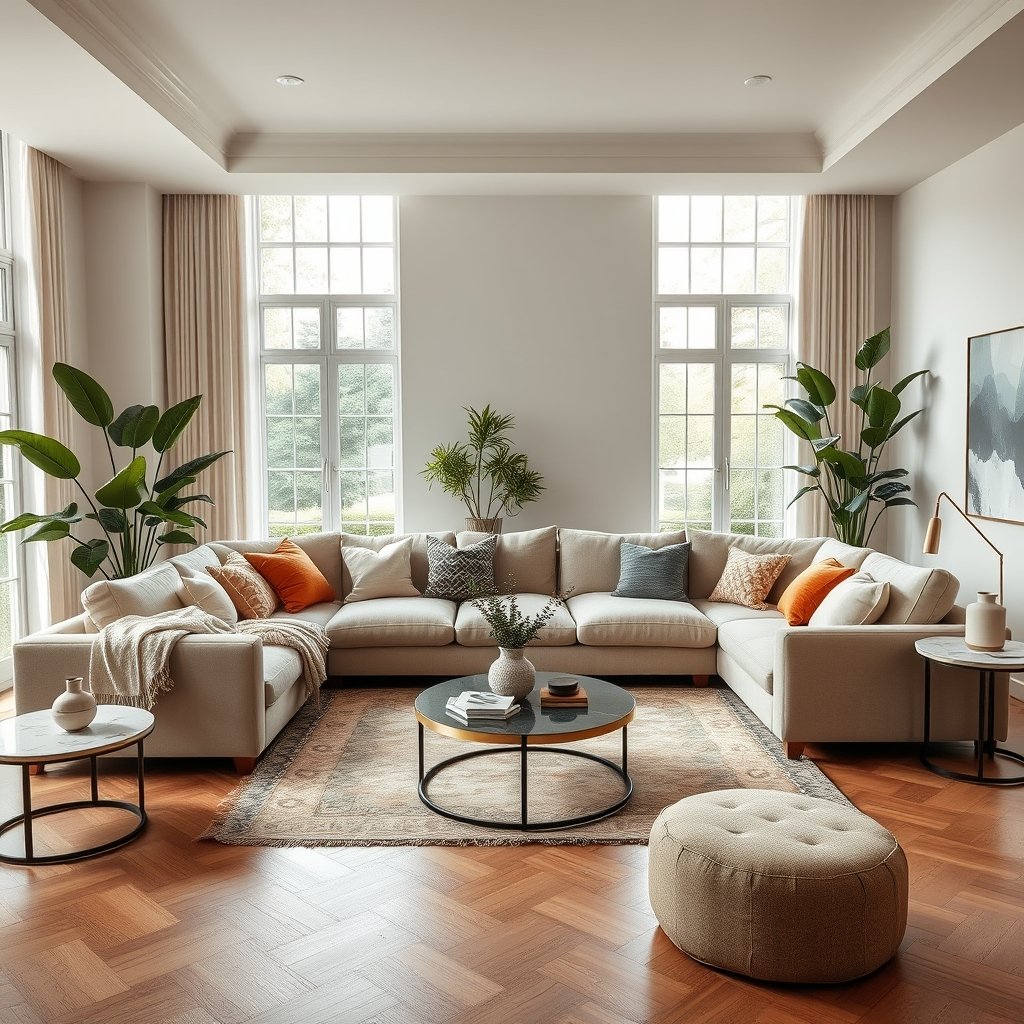
Choosing the right modular sofa L-shaped customizable setup for compact spaces takes a bit of planning. In apartments under 600 sq ft—especially studios, narrow living rooms, or small one-beds—traffic flow is king. Here are top configurations that minimize layout regrets:
- Compact L-shape: Tuck an L-shape against a corner but keep the open side clear to preserve walkways. Pros: maximizes seats, adds lounging space. Con: easily “locks” the room if it blocks the only path.
- Single chaise + ottoman: Place a modular sofa with ottoman as a footrest or coffee table. Pros: multi-use and guest-ready; cons: ottoman must store easily if not needed.
- Split-back sofa configuration: Divide modules into two sections, either for twin conversation areas or to double as beds. Pros: flexible for guests; cons: less unified seating for larger gatherings.
- Floating two-seat + ottoman: Keeps sightlines open, easy to move, ideal near windows or as a divider in a studio. Pros: ultra-flexible; cons: fewer lounging options.
Always prioritize preserving walkways (at least 36–48 in) and the 2/3 wall rule: your sofa should cover no more than two-thirds of the main wall[Hernest].
Demand for these flexible setups is highest in the most space-restricted urban zip codes, so brands often design specifically for small-room adaptability.
How to test comfort and reconfigurability before you buy
Never rely on photos alone when buying a modular sectional sofa. Whether shopping online or in a showroom, always:
- Sit in every module (including chaise, ottoman, and corner pieces).
- Test each configuration—attach/detach modules, reassemble, and verify seam alignment.
- Check cushion rebound—firm cushions should spring back even after minutes of sitting.
- Request fabric swatches and verify removable covers for cleaning.
- Ask for details on trial return windows and module-level warranties.
Since insufficient cushioning and uneven comfort are the most-reported complaints, prioritize hands-on testing and do not skip warranty fine print.
You’ll find more practical testing guidance in reviews from independent testers, Forbes’ home testers, or design-focused YouTube channels, plus conversations in online furniture communities.
Internal resources, such as our garage conversion guide, can help you think creatively about multi-use furniture and spatial planning if you’re forced to change layouts often.
Assembly, connector types and maintenance — avoid the common longevity traps
Understanding how your rearrangeable sectional couch connects is critical for both durability and renter usability. There are four common connector systems:
- Pin & slot: Toolless, but can loosen after frequent moves.
- Metal bracket: Secure but may need periodic tightening; heavier for single-person moves.
- Magnetic: Extremely easy, but magnets can shift over uneven floors.
- Hook-and-loop (Velcro): Quick but less reliable for heavy use or jumping pets.
Expect initial assembly time to range from 15 minutes (magnetic or Velcro) to over an hour (metal bracketed L-shapes). Reassembly frequency can increase long-term wear on cheaper connectors.
Maintenance tactics:
- Vacuum underneath every few months to keep connectors clean.
- Check for any wobble or drift; re-tighten or realign modules as needed.
- Ask your retailer for replacement connector or fabric kits in case of failure—some brands now supply these as standard.
For renters who move every year, tool-free connectors are often worth the extra upfront cost to save time (and possible damage fees) during move-out.
For more long-term maintenance tips, see our maintenance and cost-saving home guides.
Overlooked but critical buyer concerns
Most sofa guides skip crucial long-term or apartment-specific challenges. Before buying, investigate:
- Acoustic/vibration impact: Thin-walled apartments let sofa frame vibrations travel. Lightweight or hollow modules can amplify noise—especially annoy neighbors below. Test or request data, or look for brands using noise-reducing feet.
- Environmental footprint & recyclability: Ask about the foam type, recycled content, and whether modules are designed for end-of-life separation and recycling.
- Module-level warranty/service: Some brands cover only the frame, not connectors or covers. Clarify if you can replace a single failing module or cover under warranty.
- Pet-specific durability: Look for actual claw/scratch-resistance testing, double-stitched seams, and replaceable covers/ottomans for easy replacement.
- Accessibility: Users with limited mobility may need higher legs, firmer seat heights, or “zero-gap” modules to avoid tripping.
- Resale value: Popular modular sofas hold resale well—but only if covers & connectors are undamaged, and modules are still sold by the brand. Check for active secondary markets.
- Smart integrations: Optional USB charging arms, built-in storage, or the ability to connect with smart home furniture can add long-term functionality.
True peace of mind means planning for noise, recycling, pets, and future buyers, not just today’s style.
Materials, fabrics and pet-proofing — what to prioritize
Material choices shape daily comfort and future costs. Prioritize:
- Foam density: Look for medium to high-density foam (1.8 lb+), which stays resilient through repeated reconfigurations.
- Frame materials: Hardwood and powder-coated steel last longer and have less flex than softwood or plastic frames—crucial for frequent moves.
- Performance fabrics: Stain-resistant polyester blends (brushed or flat weave), Microfiber, or top-grain leathers outperform basic cotton. Removable, washable covers are a must for pet owners.
- Pet-proofing: Upgrade to double-stitched seams, reinforced zippers, and modular sofa with ottoman covers that unclip and replace without tools. Opt for tightly woven fabrics less likely to snag.
Given common complaints about premature wear, choose a brand that stocks spare covers and replacement foam. A little maintenance and the right materials can double the usable life of your apartment-sized modular couch.
Planning a pet-proof or multi-use upgrade for your home? Read more in our aging in place safety remodels—many concepts overlap in accessibility and durability.
Warranty, service, returns and resale — read the fine print
The benefits of a build your own sectional sofa are diluted if warranties or return policies come with gaps. Check:
- Module-specific warranty: Are all modules, connectors, and covers covered—individually?
- Return window: Is there a trial period with full refund (not just exchange/credit) eligibility?
- Parts availability: Can you get single replacement modules/covers/hardware, or is the whole set orphaned if the line is discontinued?
- Resale flexibility: Are you allowed to buy/sell extra modules secondhand, and can new owners get support?
Research indicates most competitor guides skip module-level warranty analysis—be thorough, especially for rearrangeable sectional couch models bought online.
Apartment buyer’s quick checklist (measurements, must-have features, red flags)
Here’s a rapid checklist to speed up selection and minimize regret:
- Measure all entryways (not just living room) and ensure each module will fit through.
- Check sight lines—avoid blocking windows, HVAC vents, or closet doors.
- Confirm connector type and assembly process—tool-free is best for renters.
- Check foam density (at least 1.8 lb) and seat depth (at least 21″).
- Verify removable, washable covers—especially if you have pets or allergies.
- Test real assembly in store or via brand videos.
- Get written confirmation of warranty/parts specifics before purchase.
- Note built-in pet- and accessibility features: higher legs, solid bases, reinforced seams.
With modular options growing ~12% yearly and now 15%+ of the market, using this list helps you filter value picks fast—and avoid the top pain points.
Suggested shopping flow and decision timeline (how to buy this week)
- Measure your room, doors, and critical sight lines.
- Shortlist 3–4 models that offer the right number of modules and return flexibility.
- Order fabric swatches and test any showroom displays or delivery trial models.
- Test connectors and comfort in every setup you plan to use at home.
- Check warranty/returns paperwork—ask questions on anything unclear.
- Make your purchase and prep for self or professional assembly—schedule delivery to avoid moving bottlenecks.
Thanks to brisk market growth (≈1.8 million new units in 2024), availability is strong—move efficiently to avoid choice overload and secure your first-choice pick for upcoming move dates.
Final recommendations and 3 plug-and-play configurations to consider for common apartment types
Basing your search around apartment type and likely use-case will keep your modular sofa purchase low-risk and maximize value. Consider:
- Studio/efficiency: 3-piece compact L-shape with a modular ottoman that stores underneath; choose stain-resistant, removable covers and insist on at least a 2-year full-module warranty.
- Narrow living room: Two-seat modular base with a floating ottoman; pick metal or magnetic connectors and budget for extra storage pieces if needed. Test for seat support at both ends before purchase.
- One-bedroom guest-ready: Configurable 3-piece set that quickly converts to a twin-sized guest bed. Prioritize quick-release covers and brands with proven resale value (active Facebook Marketplace groups).
With the modular sofa L-shaped customizable market rising above 15% share, focus on configurations that sustain easy traffic flow and allow you to cheaply replace worn-out elements—ensuring your modular sectional sofa pays off long-term.
Apartment living demands flexibility and smart risk reduction. Compare real-world owner feedback, test comfort and assembly in-person if possible, and read policies thoroughly—then enjoy a layout solution that moves and grows with you.
Conclusion
The right modular sectional sofa makes small-space living simpler, more flexible, and lower risk. Prioritize reconfigurability, material quality, hands-on comfort testing, and detailed warranty terms. Don’t rush—careful evaluation now means years of comfort and adaptability ahead. Use the steps above, stay alert for overlooked variables, and continue comparing options to land the smartest sofa-for-apartment purchase.
Ready to dig deeper? Explore more home optimization guides or learn about multi-generational space planning for added value.
FAQ
Do modular sectional sofas really last longer than standard sofas?
With quality connectors, higher-density foam, and replaceable covers, modular sectional sofas can outlive traditional options—especially for renters who move or frequently change layouts. However, long-term durability depends on the specific brand and how often you reconfigure modules.
Is a modular sectional sofa worth it for pet owners?
Yes, provided you choose tightly-woven, stain-resistant fabrics, double-stitched seams, and easy-to-remove covers. Many modular sofas let you replace only the damaged module after a pet accident or scratch.
What’s the best modular sofa configuration for a studio apartment?
A compact L-shape with an ottoman is usually best—it creates lounging space, divides living from sleeping, and allows clear traffic flow. Look for units with ottoman storage and quick-release covers for versatility.
Should I pay extra for magnetic or metal connectors?
If you plan to rearrange or move often, magnetic or metal connectors offer easier assembly and greater long-term reliability. Tool-free connections are especially valuable for renters and frequent movers.
Are modular sectional sofas easy to resell?
Generally yes—especially if the brand is still active and modules are in demand. Keep spare parts and documentation, and clean/removable covers improve resale prospects on platforms like Facebook Marketplace or Craigslist.
There are also easy upgrades for improving ambient lighting in apartments with minimal windows or dark finish modular sofas.
A simple hack for reducing sofa drift and apartment noise is to add an area rug pad before assembling your new modular sectional.
Rolling bins are ideal for maximizing hidden storage under chaise modules or floating ottomans.
Personalize your look by adding texture to the sofa using soft velvet throw pillows that coordinate with your color scheme.
Address small scratches and wear with a touch-up repair kit for long-lasting showroom looks.