


Convertible desk bed solutions are booming in 2024 as remote work and shrinking living spaces force city-dwellers to demand more from every square foot. If you want a workstation and a real bed—without makeshift setups or missing safety essentials—read this first. This guide cuts through marketing hype. It tells you exactly what to look for, what can go wrong, and how to get a convertible desk bed that fits your space, your workflow, and your long-term peace of mind.
Key Takeaways
- The market for convertible desk beds is growing fast, but most packages leave out essentials like mattress, electrical outlets, or full workstation-ready depth.
- Installation is rarely plug-and-play—mounting, stud reinforcement, and power/cable planning make the difference between a safe showpiece and an ongoing headache.
- Poor ergonomics and missing clearance are the top reasons buyers regret their choice. Measure twice, demand desk specs, and insist on a real warranty.
- Why convertible desk beds are booming in 2024–25
- Is a murphy bed with desk right for your room? (How to decide)
- Top buyer pain points (and how to avoid them)
- Structural safety & mounting you must verify before buying
- Ergonomics: configuring the desk as a full-time workstation
- Planning for power, lighting, and cable management
- Sizing, clearances, and mattress considerations for small rooms
- Installation realities: time, tools, and hiring pros vs. DIY
- Budgeting: price ranges, value drivers, and ROI for multi-use units
- 3 real setups (studio student, small family, guest/office combo) — what works and why
- Quick buyer checklist & 10 must-ask questions for vendors
- FAQ — safety, warranty, mattress compatibility, ceiling height, and delivery
- Next steps / CTA: measurement template + how to book an assessment
Why convertible desk beds are booming in 2024–25
City apartments keep shrinking, but the demand for a real home office continues to climb. The convertible desk bed—the ultimate space-saving solution—is getting a massive boost from several market drivers:
- Remote and hybrid work now account for 28% of the global workforce, increasing the need for bedroom-office combos (source).
- The small-space furniture sector grew an estimated 18% from 2021 to 2025. Beds with integrated desks now make up over 18% of market revenues and are projected to top USD 7.5 billion by 2025, growing ~10% each year.
- Buyers are acting fast—limited model stock, rising material prices, and 8–12 week lead times mean that delay can cost you the features or finish you want.
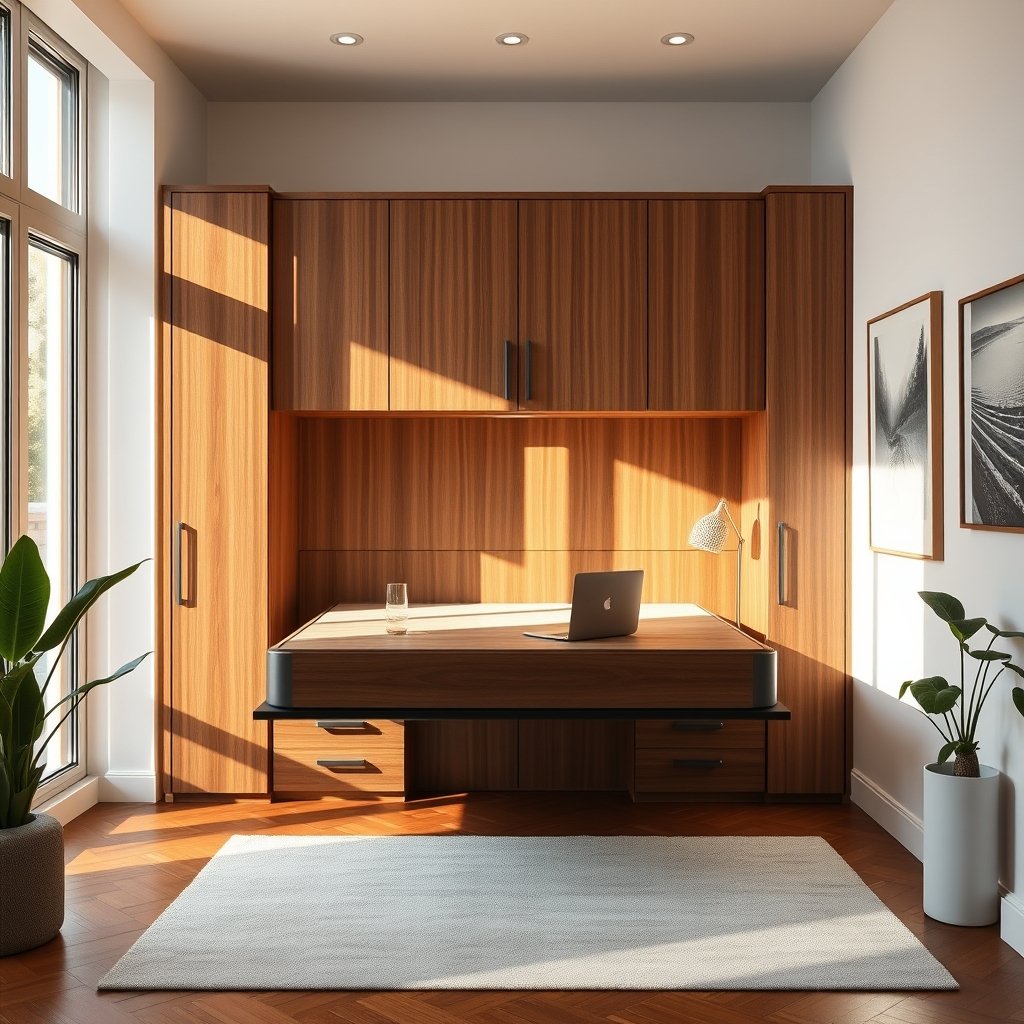
Getting a convertible desk bed isn’t just trendy—it’s a pragmatic investment in your productivity, comfort, and future resale or rental value. But only if you pick the right model and plan for installation up front.
Is a murphy bed with desk right for your room? (How to decide)
Not every convertible desk bed or murphy bed with desk fits every space or need. Ask yourself:
- Room size: Minimum 7×10 feet for a full/queen wall bed with fold-down desk. For murphy bed small room setups, check that you’ll still have 30–36 inches of walking space after the desk is deployed.
- Ceiling height: Many queen murphy beds require at least 92–94 inches. Vertical solutions need more height but less wall length, while horizontal units shave several inches off the ceiling requirement (source).
- Mattress preference: Most wall beds fit 8–10-inch mattresses—avoid pocket coils thicker than specs allow, or the bed won’t close properly.
- Are you working from home five days a week? Choose a true workstation-grade desk. For occasional use, some murphy bed small room models with smaller desks (or rolling desks) will suffice.
Between 2022 and 2025, murphy bed sales rose 11.2% per year due to these hybrid needs. Still unsure which setup? See our real-world examples and maximize your ROI on space upgrades.
Top buyer pain points (and how to avoid them)
With so many wall bed with fold-down desk models on the market, buyers often discover issues only after delivery. According to aggregated reviews and industry research:
- Desk depth is too shallow—many desks are just 14–18 inches, barely enough for a laptop, much less dual monitors.
- Installation is cumbersome—DIY often demands stud reinforcement, a helper, and tools your average apartment renter doesn’t own.
- Missing essentials—key components such as mattress, cable management, or power strips are rarely included out of the box.
These issues echo through nearly every hidden bed home office combo or wall bed with fold-down desk review (source). To avoid them:
- Insist on clear desk depth and mattress specs. Minimum desk depth for a hybrid setup: 24 inches for dual monitors, 20 inches for single monitor/laptop and keyboard.
- Verify in advance if power or cable routing is built in. If not, budget for professional add-ons.
- Ask for detailed installation instructions and confirm if wall mounting hardware is included for your wall type (concrete vs. drywall/wood studs).
Want more insights on avoiding cost overruns? Check our spray foam insulation savings guide for budgeting tips that apply to furniture installation too.
Structural safety & mounting you must verify before buying
Wall-mounted murphy bed with desk systems can be heavy—80 to 350 pounds fully loaded, plus dynamic forces when opening or closing. Before you buy, check:
- Wall type: Is your wall solid concrete, brick, or standard drywall on wood/steel studs? Most units require mounting to at least two studs with 3/8″ structural lag bolts (4 inches minimum spacing).
- Stud reinforcement: If studs aren’t in the ideal position, add horizontal blocking or hire a pro. Never mount solely into drywall anchors.
- Load calculation: Add up: unit weight + mattress + typical user weight (static) + opening/closing force (dynamic). Example: (180 pounds unit + 65 pounds mattress + 250 pounds user) x1.5 safety factor = 735 pounds on wall mounting points.
- Helper for lift mechanism: Lifting the bed frame onto the cabinet often requires at least two adults. Don’t risk injury by going solo.
- Inspect slat/gap stability: Many reviews mention mattress sag or frame flexing. Solid plywood slats or steel mesh outperform cheap particleboard or plastic supports.
According to product review roundups, installation mistakes or poor anchoring are among the top safety complaints. If in doubt, budget $400–$950 for professional installation—especially in newer buildings with steel studs or plaster walls. For additional aging-in-place safety, see our bathroom remodel safety guide.
Ergonomics: configuring the desk as a full-time workstation
A convertible desk bed must function as your real, daily workstation—not just a pretty laptop perch. Here’s what works:
- Desk depth: 24 inches minimum lets you use dual monitors, a keyboard tray, and a dock. Anything under 20 inches will cramp your wrists.
- Desk height: 29 to 30 inches from the floor is standard. For tall users, seek adjustable desks, but most murphy desk surfaces are fixed.
- Monitor placement: 18–28 inches from your eyes (top of screen at or slightly below eye level).
- Weight capacity: Most fold-down desks support 35–60 pounds. Check specs if you use monitor arms or heavy hardware.
- Accessory support: Look for models that allow clamp-on monitor arms. Some convertible sofa bed desk units lock desks flat, while others “float” as you fold the bed (be sure they clear your monitor base).
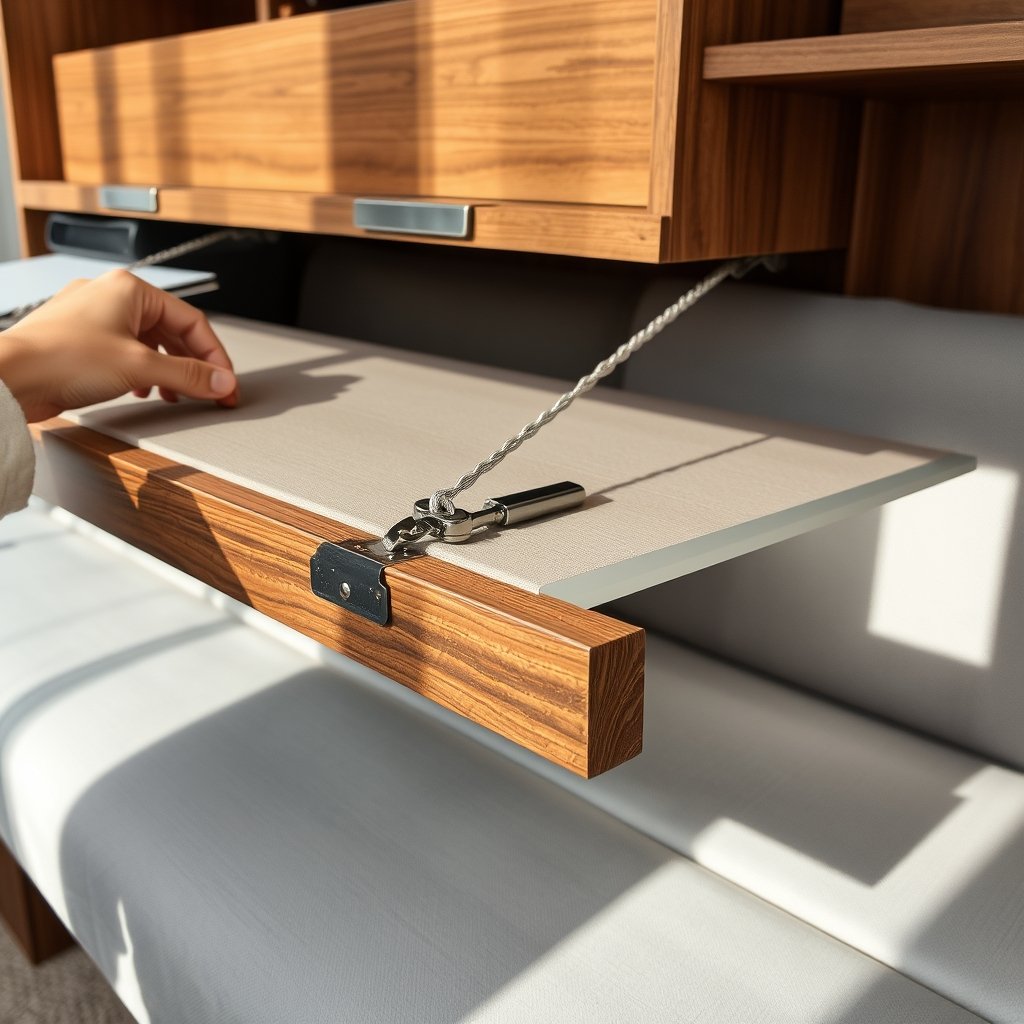
Don’t accept vague “fits most laptops” claims—get hard measurements and a diagram. See our smart furniture guide for integrated tech solutions in small homes.
Planning for power, lighting, and cable management
Few models of wall bed with fold-down desk or hidden bed home office combo include integrated power, but every workstation needs it. Without pre-planning, you’ll face:
- Tangled cords every morning
- Unsafe outlet extensions behind beds
- Insufficient lighting or screen glare at night
Solutions:
- Plan outlets in advance—ideally behind/below the desk, accessible when folded up or down.
- Run a surface-mount wire raceway or wireless charging pad—blends well with modern cabinetry and can be added after installation.
- Add stick-on LED lights—wireless motion-activated LED bars or puck lights under shelves reduce glare and free up plug space.
- For permanent solutions—ask your installer about hardwired USB/AC outlets. Always follow code, especially for hidden wire runs or if you rent.
If your chosen model doesn’t offer built-in power, budget $100–$400 for upgrades. For a deep dive on home power, check our generator installation guide.
Sizing, clearances, and mattress considerations for small rooms
Sizing the right murphy bed small room setup can make or break your project:
- Ceiling height: Some vertical murphy beds require 92–94 inches. Horizontal beds work in rooms as low as 83 inches—perfect for basements or attics.
- Wall clearance: Allow at least 81–85 inches out from the wall for a queen-size when open. Add extra width at the sides if you want side cabinets or drawers.
- Mattress: Most wall beds fit a standard 8–10-inch foam or hybrid mattress, but thicker mattresses prevent closing. Ask if the mattress is included (it usually isn’t!).
- Cabinet depth: Typical is 15–20 inches. Thicker mattresses/pillow-top models often don’t fit.
- Space-saving bedroom furniture tip: Go for split-cabinet or folding-leg frames for tight spaces.
Customers report missing clearance specs and finding that lead times or included mattress don’t match listings. Always get diagrams up-front—and see our multigenerational living guide for tips on flexible layouts.
Installation realities: time, tools, and hiring pros vs. DIY
Most buyers underestimate the work involved in assembling and mounting a murphy bed with desk. Plan for:
- Realistic time: For 2 people, expect 4–6 hours minimum (not counting wall prep or waiting for landlord approval). Solo installation is not recommended.
- Required tools: Power drill, stud finder, level, socket wrench, and possibly a rotary hammer for concrete walls.
- Common pitfalls: Poorly marked instructions, stripped screws, misaligned panels, and last-minute discoveries that the desk won’t clear your baseboard heaters.
- Cost comparison:
- DIY kit: $1,200–$2,000. You provide labor, risk mistakes. Warranty may be voided by incorrect installation.
- Preassembled: $2,500–$6,000. Often includes white-glove delivery, pro mounting, full warranty.
- Custom built-ins: $4,500+, permits and electrical upgrades extra.
| Install Option | Price Range (USD) | Typical Time | Warranty Coverage |
|---|---|---|---|
| DIY Kit | $1,200–$2,000 | 4–8 hours (2 people) | Limited |
| Preassembled/White-Glove | $2,500–$6,000 | 1–2 hours (pros) | Full |
| Custom Built-In | $4,500+ | Varies | Custom/Negotiated |
Many customer complaints center on shipping damage, missing hardware, or hiring an unqualified installer. Always check reviews and certifications before committing.
Budgeting: price ranges, value drivers, and ROI for multi-use units
Expect to pay anywhere from $1,100 for a flat-pack kit up to $6,500+ for custom cabinetry with integrated power and pro installation. Key value drivers for convertible desk beds:
- Materials: Solid plywood or hardwood lasts longer than particleboard.
- Mechanism: Steel piston/lift systems are smoother and quieter than spring-only models.
- Warranty: 5–10 years is best-in-class—avoid models with less than 2 years.
- Integrated features: Power/USB outlets, LED lighting, and cable hiding raise usability and resale.
The market’s strong growth (nearly USD 5B in 2023 and projected USD 7.5B+ by 2025) means more options—and more competition for top vendors’ inventory and install slots (source).
Want your investment to pay off? Choose a quality convertible desk bed that can move with you or boost rental value. See our ADU ROI strategies for maximizing multi-use space returns.
3 real setups (studio student, small family, guest/office combo) — what works and why
Studio Student (180 sq ft): Pick a horizontal twin bed/desk combo, wall-mounted, with a 20-inch deep desk. Rolling cart for a second monitor. LED stick-on lighting. Result: transforms from study nook to bed in under 40 seconds.
Small Family (2 adults, 1 child/guest): Queen wall bed with fold-down desk on one side, child’s rolling twin stored under. Side cabinets for bedding/storage. Power raceway and cable clips keep gaming laptops plugged in all day. Split-closet shares space.
Guest/Office Combo (350 sq ft): Vertical murphy bed with desk, queen size, premium foam mattress. Built-in USB AC strip under desk. Monitor sits on wall arm; keyboard stored on slide-out rail. Room doubles as Zoom office by day, guest retreat by night—no clutter.
Each setup works because it pairs precise measurement with workflow needs. Bonus: All three can be reconfigured or sold if you move—a key value for urban renters. For more before/after room ideas, check our modular sectional sofa guide.
Quick buyer checklist & 10 must-ask questions for vendors
Quick Buyer Checklist
- Measure your space: width, depth from wall, and ceiling height
- Confirm mattress inclusion and max thickness
- Verify headroom and walking space (bed up and down)
- Check wall type and access to at least 2 studs for secure mounting
- Ask about desk weight limits and depth
- Request warranty and return policy details
- Clarify lead time for delivery and install
- Identify installer availability and costs
- Insist on integrated power and cable management—or plan to add it
- Read reviews for pain points on installation and missing essentials
10 Must-Ask Questions for Vendors
- Is the mattress included, and if not, what max thickness fits?
- Does the desk support at least 35–60 pounds?
- What are the actual desk depth and height measurements?
- Is all mounting hardware included for my wall type?
- What is the minimum and recommended ceiling height?
- Are power outlets or cable management built in?
- What’s the full warranty—parts, labor, and mechanism?
- What is the lead time for shipping and pro installation?
- What is the return or restocking policy for custom pieces?
- Do you have photos or diagrams of the bed open and closed in real rooms?
FAQ — safety, warranty, mattress compatibility, ceiling height, and delivery
Is a convertible desk bed safe?
Yes, if mounted into studs with the correct anchors and used as directed. Never mount into drywall alone. Professional installation is strongly recommended for heavy models or if concrete/steel is involved.
Will my existing queen mattress fit a murphy bed with desk?
Most accommodate 8–10-inch foam or hybrid mattresses. Pillow-tops or thick pocket coils often prevent bed closure. Check your unit’s exact depth specs and ask if mattress is included.
How much ceiling height do I actually need?
Most vertical queen murphy beds with desks require 92–94 inches minimum. Horizontal units can work with 83–86 inches. Measure both finished floor and under any light fixtures.
Can I install this myself as a renter?
If your lease allows, yes—but confirm wall type and always ask landlord. Opt for professional installation if you lack tools or wall access, and look for models built to be disassembled if you plan to move soon.
How long does shipping and delivery take?
Lead times are typically 4–12 weeks due to demand and custom orders. White-glove delivery may shorten install time, but order early to secure preferred features or finishes.
Next steps / CTA: measurement template + how to book an assessment
Ready to take the next step? Download our free room measurement template (PDF). Get your wall and power point measurements, photos, and wish list of features together. Then, email your top 3 vendors with the 10 questions above. For peace of mind, request a virtual or in-person assessment from a certified installer—book early, as lead times move quickly in today’s market.
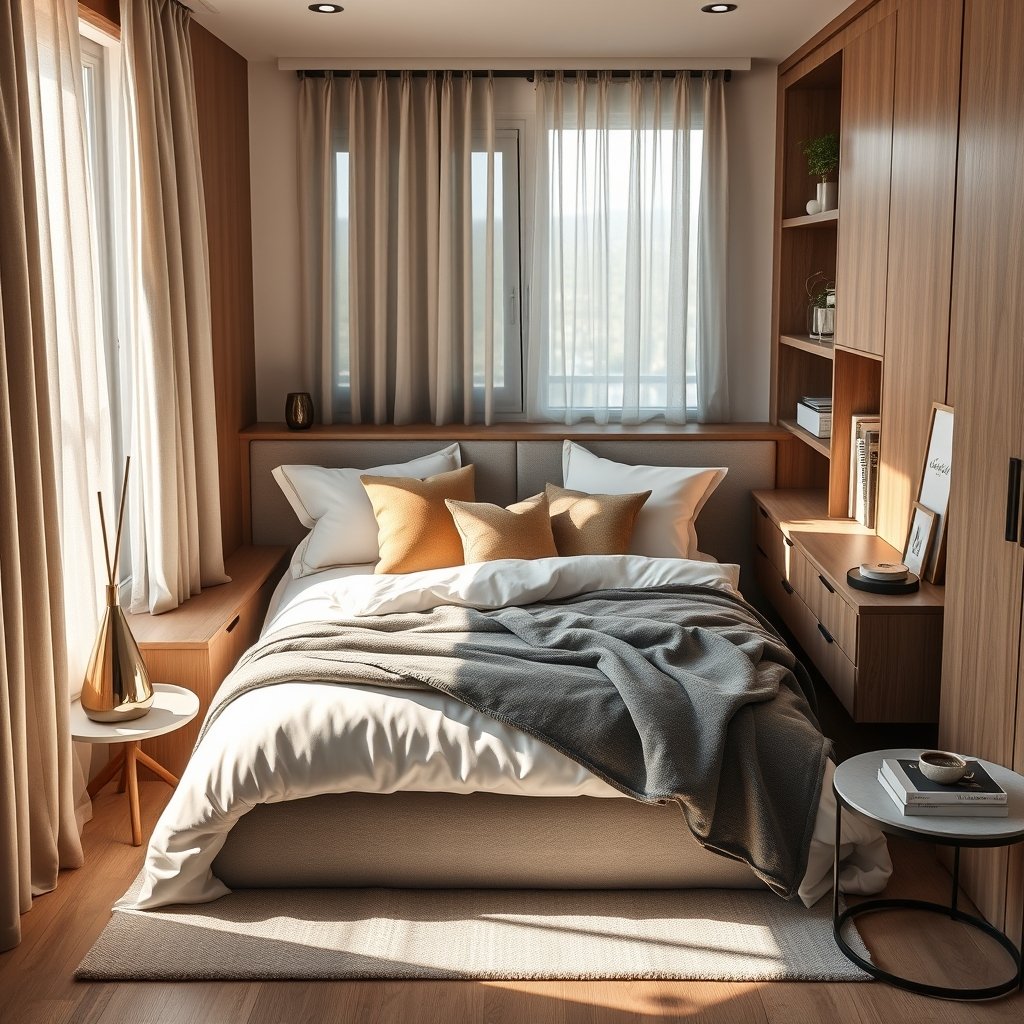
The rise in hidden bed home office combo systems makes now the best time to upgrade your space. Don’t wait for the next price spike. Get your convertible desk bed measurements ready and secure your install slot this month.
—