

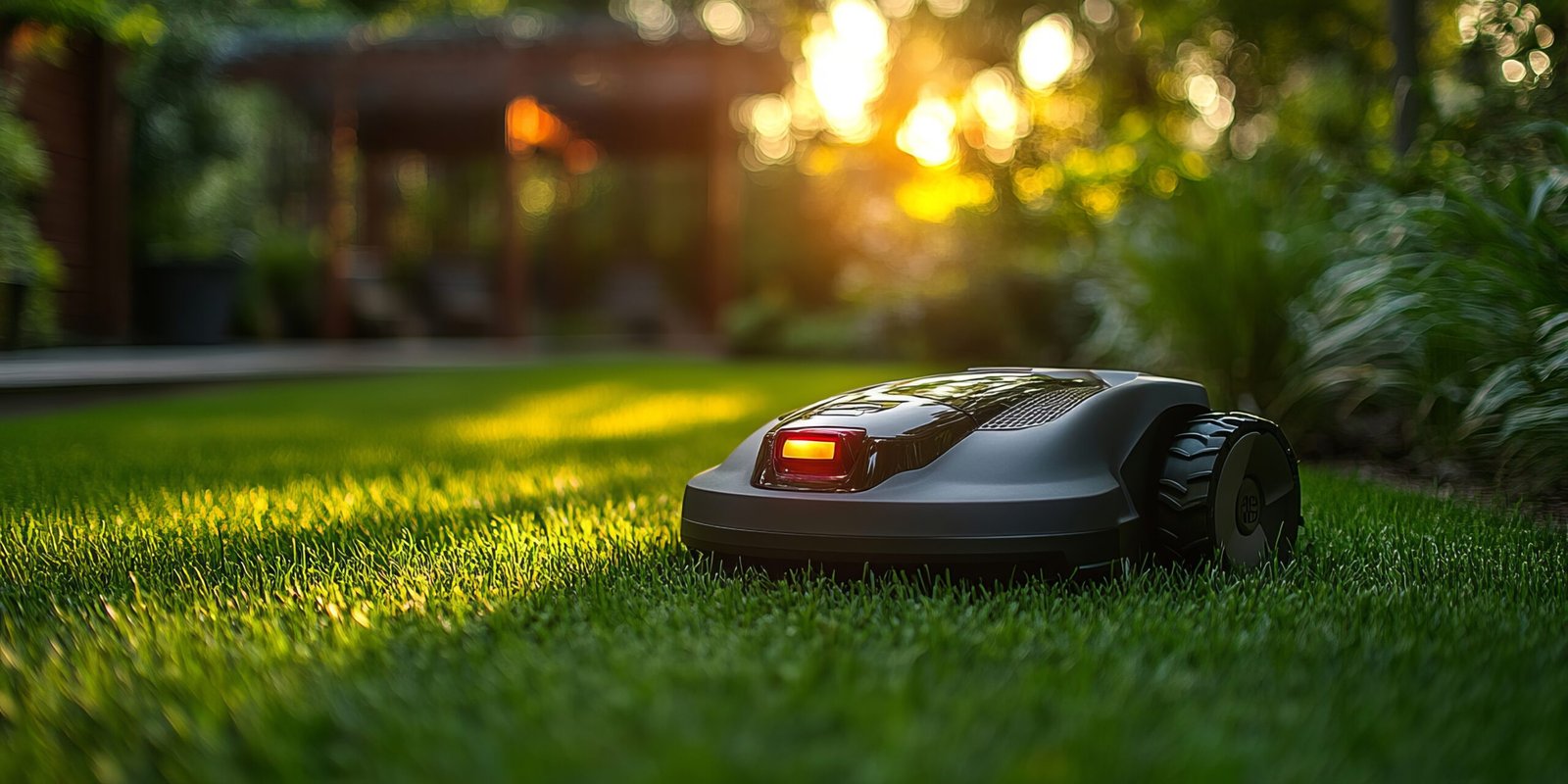
Robotic lawn mower ownership for large properties in 2026 is about more than flashy specs or short-term convenience. You want real-world reliability, robust coverage, and support you can count on season after season—especially if you’re done with weekends lost to mowing and ready to invest in a time-saving solution that truly pays for itself.
Key Takeaways
- Top cordless robotic lawn mowers for 2026 deliver 2,000+ hours MTBF and 98%+ uptime on large lawns, but real-world navigation accuracy and service support matter even more than headline features.
- Wire-free RTK/EPOS systems provide superior coverage on open terrain but may struggle with navigation near trees or tall structures, directly affecting cut consistency.
- Don’t choose based on specs alone—evaluate operating costs, warranty and repair support, mapping accuracy, and actual usability for your unique property.
- Quick verdict — which robotic lawn mower to buy for large lawns in 2026
- What actually matters when buying an autonomous mower (the checklist)
- Reliability & performance: cordless robotic lawn mowers vs AI-powered autonomous mowers (for large lawns)
- Common user complaints and failure modes — especially for wire-free robot mowers
- Husqvarna Automower vs Segway Navimow — what existing reviews miss (critical comparison)
- Energy, maintenance and real operating costs (beyond purchase price)
- Installation & setup considerations for wire-free/RTK systems on large properties
- Security, theft prevention and connectivity (what to expect)
- Noise, neighborhood impact and working windows
- Model recommendations by lawn size & terrain (practical shortlist)
- How to test a mower yourself before you buy (7-point in-yard checklist)
- FAQ + final decision flow (convert this into a quick decision guide)
Quick verdict — which robotic lawn mower to buy for large lawns in 2026
If you need the best robot lawn mower 2026 for a large lawn, prioritize models proven to last, not just those with flashy features. For 0.5–1 acre on a value budget, the Segway Navimow X390 covers big ground and offers simple wire-free setup, though you’ll need to monitor navigation under trees. In the mid-tier, Husqvarna Automower 450XH EPOS stands out for support and real-world reliability. If your lawn is huge (2–5+ hectares) or needs commercial-grade uptime, look at AI-driven models like John Deere’s 2025 autonomous units. Data shows top cordless robot mower for large lawns options exceed 2,000 hour MTBF and deliver greater than 98% uptime in open terrain (Wirecutter). Factor service and repair access—when something breaks, local support is worth every penny.
What actually matters when buying an autonomous mower (the checklist)
Forget endless feature charts. Here’s what every large-lawn owner should actually check before a purchase, drawn from hands-on autonomous mower review and real user pain points:
- Coverage per charge: For huge lawns, look for 2-5 hectares per charge in commercial AI models. Consumer cordless robotic mowers top out around 1–1.5 acres per cycle.
- MTBF & uptime: Aim for ≥2,000 hours MTBF and 98%+ uptime. Should hold up for years with regular use.
- Obstacle avoidance: Latest AI units boast ~99% success, but mediocre models may beach on twigs or skip strips.
- Service network: Local or regional support for warranty, parts, quick repairs—crucial for uptime.
- Energy use per m²: Must be factored for true cost of ownership, especially for sprawling properties.
- Slope handling: Look for ≥30% grade. Many fail above this, even if specs promise more.
- Theft protection: PIN, GPS, alarms, and 4G tracking—minimize insurance risk and quick recovery.
- Noise: Under 60 dB for late/early runs. Crucial for semi-rural or HOA neighborhoods.
Reliability & performance: cordless robotic lawn mowers vs AI-powered autonomous mowers (for large lawns)
When you compare cordless robotic lawnmower and advanced AI lawn mower models, focus on:
| Feature | Consumer Cordless Mower | Commercial AI Mower |
|---|---|---|
| MTBF (Mean Time Between Failures) | ~2,000 hours (Husqvarna 450XH EPOS, Segway Navimow X390) | Unknown, but commercial-grade John Deere 2025 unit designed for higher heavy-duty performance |
| Uptime | >98% (open terrain) | ~99% (obstacle avoidance success on open lawns) |
| Coverage per charge | Up to 1.3 acres (50–60 minutes typical) | Up to 5 hectares (one 3-4hr session) |
| Cutting power | Usually 35W–70W | Up to 0.9 kW; cuts dense or long grass without stalling |
| Navigation approach | RTK/EPOS (wire-free), classic boundary wire | Multi-sensor (RTK-GNSS, vision, LiDAR, 360° cams), wire-free, AI mapping |
| Slope handling | Up to 30–35% | Typically more, weather and ground permitting |
RTK/EPOS (wire-free) is a game-changer for systematic, efficient mowing, but struggles appear under trees or between outbuildings (Sunseeker Tech). High-end cordless models often suffice for up to 2 acres with minimal tree cover. AI-driven commercial units shine above that—especially for complex layouts or continuous heavy use as expected in estates or managed properties. Either way, attention to mapping, base station placement, and support is more important than raw specs.
Common user complaints and failure modes — especially for wire-free robot mowers
Wire-free robot mowers seemed like a breakthrough, but common issues reported in objective autonomous mower reviews include:
- Navigation gaps and missed strips—most often when RTK-GPS or LiDAR signals drop under trees or beside tall buildings.
- Edge overlap or missed patches—AI mapping can struggle after seasonal vegetation growth unless remapped.
- “Beaching” on debris or uneven areas—especially after strong storms or with heavy spring/fall leaf drop.
- Failure to return to dock—commonly when the base station antenna is obstructed or there is excessive WiFi/4G dropout on larger or remote properties.
Reviews often overlook the frequency of these real-world errors unless devices are field-tested for months, not just days.
Husqvarna Automower vs Segway Navimow — what existing reviews miss (critical comparison)
Most “Husqvarna Automower vs Segway Navimow” faceoffs miss what truly matters. Here are the critical, often-overlooked factors for
long-term value:
- Durability & warranty: Husqvarna’s service network and reputation for long-term parts support are class-leading; Segway undercuts on price and tech, but has spottier repair network in some regions.
- Repair/service costs: Out-of-warranty repairs cost less when parts are on hand locally. Husqvarna spares and labor are easier to source in North America and EU.
- Energy per m²: Husqvarna tends to be more efficient (lower kWh per acre) but always check real-world use—official numbers can be optimistic.
- Noise emissions: Both are under 60 dB, but Segway’s variable electric motors run quieter in partial load; actual difference is subtle unless mowing at dawn or late evening.
- AI mapping effectiveness: Both need seasonal re-mapping if trees grow or massive leaves fall; Husqvarna updates seem more stable via OTA in 2025 units.
- Slope >30%: Husqvarna’s traction tech is better for real hills. Segway’s drive system may slip in damp grass above 25% grade.
- On-site service: Husqvarna wins. You’ll get a pro technician for setup, upgrades, or emergency repairs in most metros.
For many suburban and semi-rural property managers, local support, consistent energy use, and overall warranty coverage are more relevant than app interfaces or one-off “vision sensor” demos.
Energy, maintenance and real operating costs (beyond purchase price)
Ignore review sites that mention only sticker price. For a cordless robotic lawnmower, true cost has four parts:
- Energy (electricity) cost: Calculate estimated kWh per month. A 60W mower running 8hr/week for 32 weeks—about 15 kWh/season, or $2-$4/month on U.S. grid rates.
- Battery replacement: Li-ion batteries typically last 2–4 seasons. Budget battery replacement $200–$500 per pack every few years; plan for the cost at ~MTBF interval.
- Service/repair parts: Expect annual spend of $100–$250 for blades, filters, or incidentals if self-servicing. Non-warranty electronic repairs or mainboard swaps can cost $500+.
- Total cost of ownership (TCO): Over 5 years, a $3–5K mower for large lawns will cost about $100–150/year to run, plus battery/service as above (see Wirecutter’s breakdown).
For those seeking energy-efficient home upgrades, also consider integrating backup power strategies—many whole home generator installation solutions work well with robotic mower charging setups, ensuring mowing schedules aren’t interrupted by grid outages.
Installation & setup considerations for wire-free/RTK systems on large properties
RTK/EPOS systems can be seamless or headache-inducing, depending on your yard’s layout. Placement of the antenna matters more than most guides admit. Here’s how to get it right:
- Antenna siting: Locate with clear sky above—minimize trees and avoid nearby metal structures. Elevate as needed for larger coverage zones.
- EPOS/RTK benefits and limits: Delivers systematic, parallel mowing and no-wire flexibility but can lose precision in shaded or built-up corners.
- Mapping runs: Run initial and seasonal mapping at midday when GPS is strongest. Remap after major landscape changes or heavy storm debris.
- Dealing with canopies/structures: Accept that corners may need supplemental trimming or periodic manual passes—perfect auto-mow isn’t always possible.
- Prevent base station obstruction: Check every side to avoid tree branches or metal objects within 3 meters.
For those expanding outdoor coverage, see our advice on energy-efficient spray foam insulation cost for garages and sheds, which can double as mower charging hubs in extreme climates.
Security, theft prevention and connectivity (what to expect)
Mowers are high-ticket theft targets. Brands like Segway Navimow include:
- Lift alarm triggered if touched when active
- PIN code lockout for basic security
- GPS anti-theft tracking, tied to your mobile app
- Built-in 4G (annual subscription) for real-time location and remote monitoring (The Verge)
Insurance policies may offer reduced premiums for mowers with active tracking. In rural areas, cellular coverage is still hit-or-miss—opt for models with WiFi + 4G fallback, and verify your provider’s coverage map. Check local police or HOA on registration requirements.
Security is also a factor for connected outdoor amenities. If you’re considering related projects, see our breakdown on EV charger home installation—similar rules apply for WiFi strength, cable security, and remote management.
Noise, neighborhood impact and working windows
Measured mowing noise is rarely highlighted in reviews, but it is a real concern for early or late mowing windows. Most top-rated robotic lawn mower units operate at 55–60 dB—about the level of a normal conversation, far quieter than traditional gas mowers. AI mowers can shorten runtime by selecting optimal patterns, reducing the total noise window. In HOA neighborhoods or communities with strict noise ordinances, check published specs (often missing in side-by-side reviews).
For more on making your home low-stress and high-functioning, see our guide to aging in place bathroom remodel—the same “quiet upgrades” philosophy applies to both bathroom and backyard.
Model recommendations by lawn size & terrain (practical shortlist)
Below are proven matches for key property profiles:
- Small/Medium (0.5–1 acre, open): Segway Navimow X390—affordable wire-free and easy setup.
- Mid/Large (1–2 acres, some trees): Husqvarna Automower 450XH EPOS—reliability, easy repair, EPOS RTK navigation keeps uptime high.
- Very large (3–5+ acres, open): John Deere AI Commercial Mower—massive area per charge, pro-grade support (contact dealer for demo before committing).
- Steep slopes (>30%): Husqvarna Automower 435X AWD—four-wheel drive, proven on hilly turf.
- Dense trees/remote land: Any RTK or AI mower, but expect manual supplementing; ask for a mapping demo first.
If you’re renovating multiple outdoor spaces or adding living areas, our garage conversion ADU guide shows how to stack ROI for property upgrades and autonomous maintenance tech.
How to test a mower yourself before you buy (7-point in-yard checklist)
Demand an in-yard demo before purchase. Run this checklist for any autonomous mower review or hands-on test:
- Quick mapping/setup check (does it map correctly and efficiently?)
- Edge coverage review (no obvious missed strips or overlaps)
- Obstacle avoidance (deliberately place a stick or pinecone—does it avoid cleanly?)
- Force a navigation around/under trees or canopies (watch for errors or stoppages)
- Return-to-dock with a partial antenna obstruction (simulates worst-case signal drop)
- Slope/terrain test (does it climb or stall, especially after rain?)
- Noise test—walk fence line or approach home windows while running
Results should align with user reports—proven reliability in these scenarios is a must for large-lawn buyers. If you want your entire landscaping strategy to be sustainable and low‑maintenance, look into drought tolerant grass seed or native plants nursery upgrades as well.

FAQ + final decision flow (convert this into a quick decision guide)
Is a wired or wire-free robot mower better for large lawns?
For open, simple properties, wire-free (RTK/EPOS) models are best—faster to install and easy to remap. For complex, tree-filled lawns or areas with spotty GPS, boundary wires may still offer more steady navigation.
When do I need a commercial AI lawn mower instead of a consumer cordless robotic mower?
If your property is over 2 acres, features complex terrain, or requires near-continuous uptime (property management, estates), opt for commercial AI. Consumer units can handle 1–2 acres reliably with some manual intervention.
What is MTBF and why does it matter?
Mean Time Between Failures (MTBF) is the average operating hours before a device breaks down. Top cordless robotic lawnmowers post MTBF ≈2,000 hours—a key indicator of reliability in hands-off operation.
How long is the typical warranty, and does repair access matter?
Most top brands offer 2–3 year limited warranties. Husqvarna is known for better local repair networks, giving quicker resolution and longer part availability than some newer competitors.
What extra costs should I expect besides purchase price?
Budget for battery replacement every 2–4 years ($200–$500), annual blade/part service ($100–$250), and low monthly electricity (~$3–5). More advanced or AI models can also carry optional app subscriptions for advanced features/security.
—